
Brand Strategy
The trust tax - why security brands can't afford to look AI-generated
·3 min read·Igal Melamed
Updated

Most of our clients are in the business of answering one question for their customers: is this real, or is it a threat? Cyber, security, fraud, identity - the entire category exists to separate the authentic from the synthetic on someone else's behalf.
Which makes it a strange year to have a brand that fails that exact test.
Generic presentation can make trust harder to earn
When a security website uses interchangeable imagery and vague promises, it gives a buyer little evidence to evaluate. Our design recommendation is to make that evidence concrete: show what the product does, who is behind it and which claims can be verified. This is an editorial assessment, not a measured conversion penalty. The effect on a specific website should be tested with its own users and analytics.
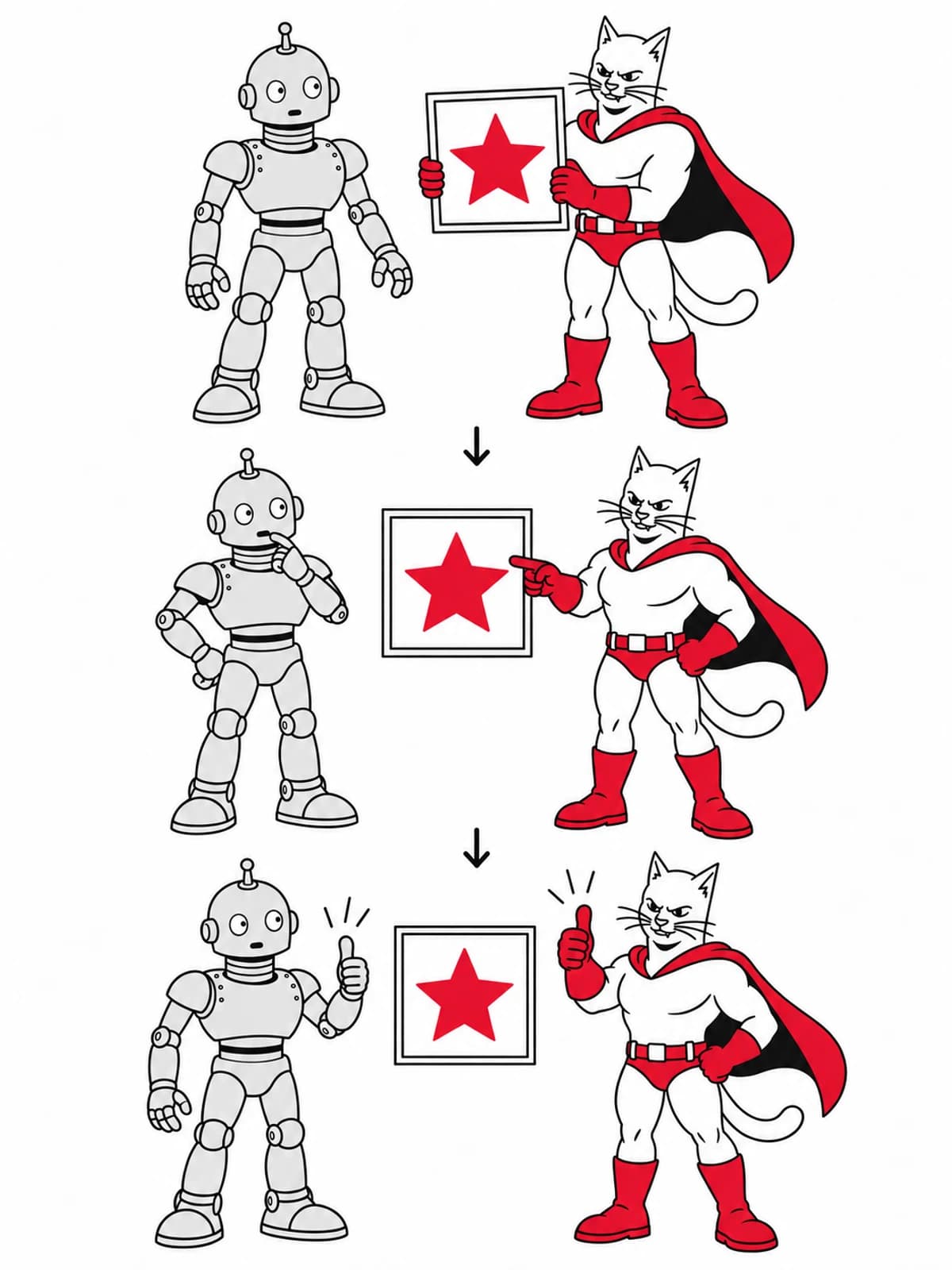
Why this matters for a security brand
For a security company, generic presentation can conflict with a promise of careful, accountable work. The "trust tax" is a metaphor, not a quantified comparison between industries.
You're on the buyer's site asking them to trust you with their infrastructure, their identities, their incident response at 3am. If the site itself reads as the statistical center of the category - the same gradient, the same stock-shaped hero, copy that could describe any of your competitors - the buyer's own instinct, the one you're selling them a product to sharpen, quietly flags it. These people did the default thing. That's a corrosive first impression when your whole pitch is that defaults are where breaches live.
There's a newer version of this fear worth naming. As it gets trivially easy to spin up a convincing-looking company from nothing - a site, a logo, testimonials, a founder photo - buyers have started scanning for proof that there's a real business behind the brand. "Looks plausible" is now the profile of a scam, not a signal of legitimacy. For a security vendor, being indistinguishable from a generated shell is close to disqualifying.
What actually reads as trustworthy now
The move is not to reject the tools - we use them daily. It's to make sure the human decisions are the ones that show. A few things we push security clients toward:
- Proof of real work. Named case studies with real outcomes, real logos, real people attached. Detailed enough that no one could have generated them without having done the work. This is why we build case studies the way we do - the specificity is the credibility.
- A visible point of view. One committed, defensible design decision a model would never have made. Spectral's purple is an example of a distinctive visual choice. Its effect on trust should not be confused with a measured buyer outcome.
- Faces and fingerprints. Real team, real voice, the occasional visibly art-directed detail. In a feed of generated perfection, the thing that's obviously made-by-a-human is the thing that reads as a real company.
- Restraint over volume. An over-automated brand pumping out generated everything now signals ghost, not scale. Fewer, better, clearly-human artifacts beat a flood of plausible ones.
The uncomfortable part
None of this means avoid AI. We'd be poor advisers if we told a security company to hand-craft every asset in 2026 - that's not how the economics work and they know it. The point is narrower and harder: the parts of your brand that carry trust are the parts that must visibly cost something human. Use the tools for leverage, everywhere, and then make sure the buyer can see the seams where a person decided.
Your customers are paying you to help them tell the real thing from the convincing fake. The least you can do is not look like the fake.
Continue exploring
Explore our branding and UX/UI services, see the Spectral brand project, or read Brand guidelines vs. design systems.